Secret History of Madeira and Porto Santo - an Interview with Miguel Santos
What is your personal connection to Madeira and Porto Santo?
I was born on Madeira. Both my parents and their parents were born here, too. So, I am a full third generation Madeiran. But my connection with this island is deeper than that. As a transpersonal astrologer, I know that it is not a coincidence that I chose to be born on this island. And the connection that I feel is much deeper than just being a native.
Part of my mother’s lineage was from Porto Santo, that small island next to Madeira. And I used to spend all my summer vacations there. Porto Santo has also a very special place in my heart.
You mentioned you’re a professional astrologer. You’re also a writer, a poet, and an artist. Are there other fields of interest that you bring together in your work?
Yes, since I was a young boy, I’ve always felt a very strong attraction to history. I’ve always felt that it is very important to really understand the past in order to situate yourself in the present, and even to have a good perspective about the future. History, and archaeology, even though I don’t have any university degrees on those fields, I studied them exhaustively. The study of ancient languages is also something very important to me. Throughout my life I’ve read many books about history, archaeology, and linguistics.
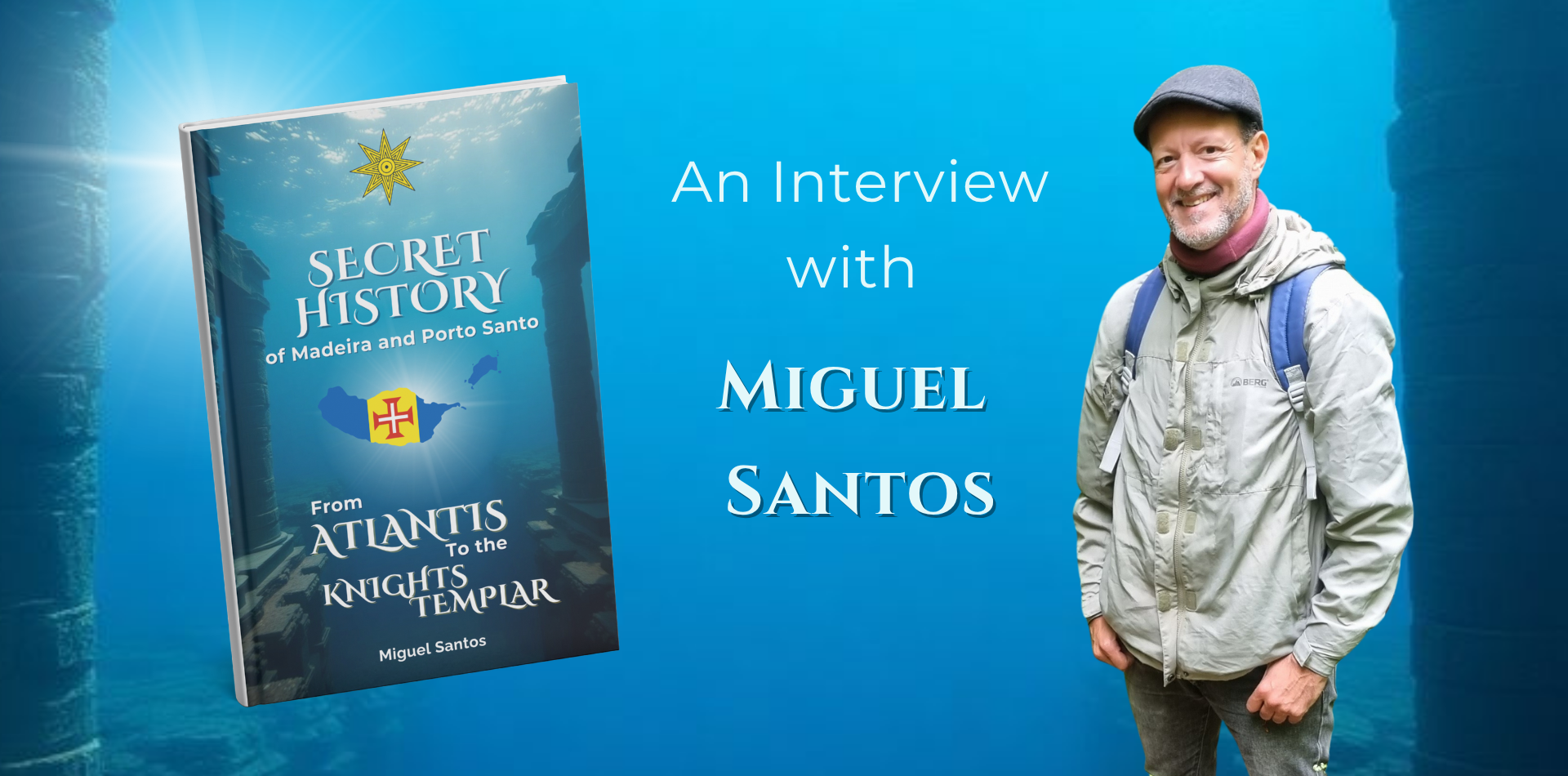
And of course, with my perspective as an astrologer, I aim to bring unification, a fusion, of all those fields of knowledge, in order to have a bigger picture about human evolution and history. And that’s exactly what I tried to do in my new book “Secret History of Madeira and Porto Santo”.
You’ve already bridged to the title of your new book: “Secret History of Madeira and Porto Santo”. Could you just summarize what inspired you to focus on this hidden side, the secret history of those islands?
My interest in history goes beyond the obvious. I was never completely satisfied with the mainstream explanation of human history, how we came from hundreds of thousands of years of pre-history and suddenly, like a miracle, we’re starting to build stone structures and the pyramids and cities and civilisations and developed writing systems. That narrative never satisfied me. And even in the more known history, from 2000 years ago to the present moment, there are still a lot of enigmas. Part of my mission, in different layers, is to turn the unknown into known. And we are in a pivotal point of human evolution and history that asks for the knowledge that has been kept secret – sometimes intentionally, sometimes not – to be brought to light.
I have a little bit of detective in me, I guess, because I really love to investigate, to research, to take little pieces of a puzzle and to try to put it together in order to have a broader perspective and understanding about history.
That sounds to me like what you’re doing is a kind of pioneering work. You research information from different sources and combine them like no one ever did before? Would you like to share some of these sources?
Yes, I think so. In the history of Madeira, I probably am the first one to do that.
Since I was a very young boy, I always enjoyed reading authors like Charles Fort, the American folklorist and researcher about ancient legends; some French writers like Jacques Bergier and Robert Charroux, and Erich von Däniken, the Swiss German author, and others.
I tried to do that in terms of global human history. I think I’m the first to do this work in terms of the particular history of the Madeiran Archipelago.
Because I also have a solid foot in mainstream history and archaeology resources, and I also have a very good understanding about the esoterical dimension and astrology, I try to unite it all in a new perspective. I researched very thoroughly the classical and the academic history and archaeology and linguistics resources. It’s very important to do that. We cannot disregard scientific academical knowledge, because there is very valid work done by historians, archaeologists and other researchers.
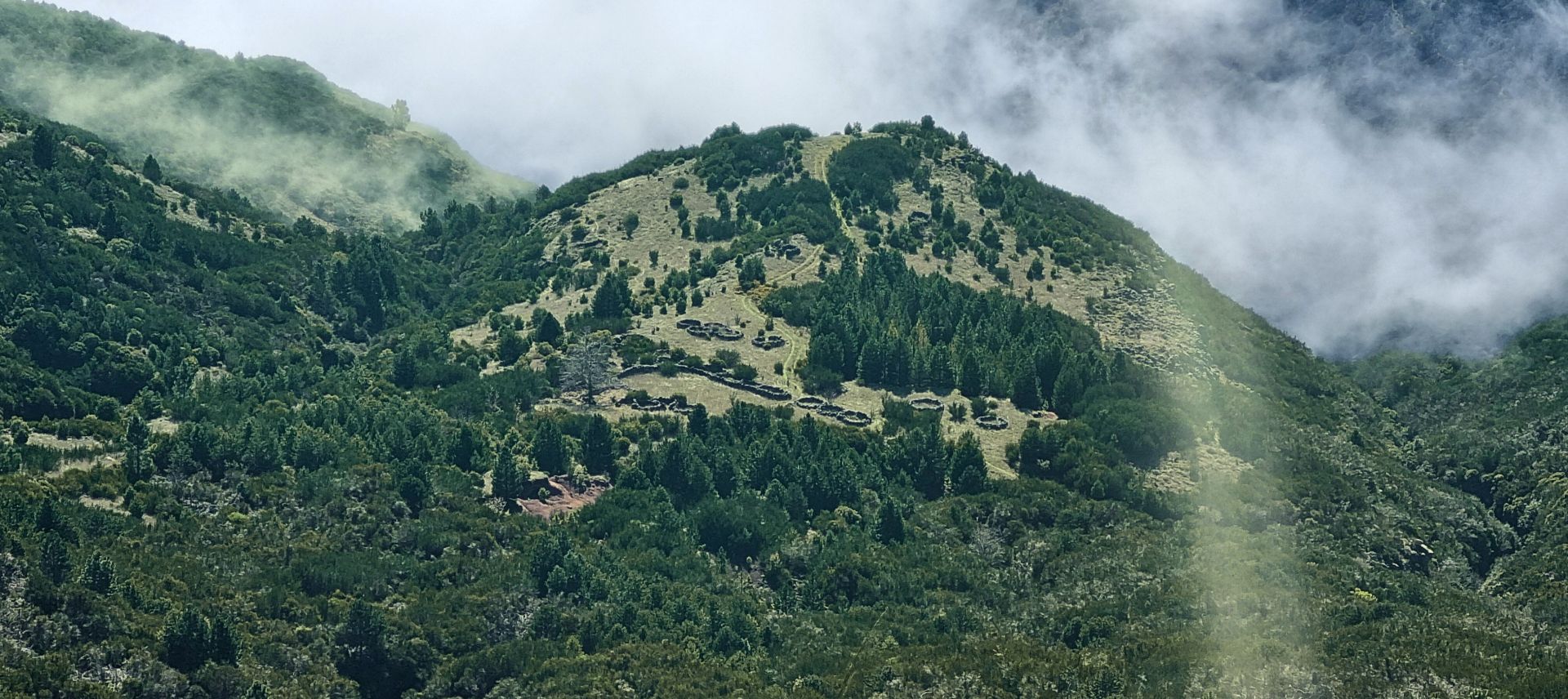
And then, with my knowledge regarding esoteric traditions, I try to merge different disciplines. Regarding the particular case of Madeira and Porto Santo, writing this book, I researched a lot of classical sources: Roman, Greek, and Ancient Portuguese sources. I also went into the landscape to study ancient structures and ruins that mainstream academia does not recognize as pre-Portuguese remnants, but I am convinced that they are.
These structures often are oriented towards certain constellations such as the rising and setting of the sun in the equinoxes and the solstices. And because in terms of geographical localisation and in terms of function, pure function, they make absolutely no sense in the narrative of being Portuguese structures.
Institutions say they were built by shepherds. That is the mainstream explanation for when they truly do not understand the presence of certain structures in the mountains or in the valleys. They just say 'oh, shepherds built it, or farmers did that to keep their farming tools'.
And of course that makes no sense. Why would shepherds and farmers go through the trouble of orientating structures towards certain constellations, towards the rising and the setting of the sun in the equinoxes and solstices? Why would they decorate it and make false doors and other very specific architectonic features that make no sense in that explanation? But they do have very striking connections and similarities with known historical and protohistorical structures that are found in North-Africa, in the Iberian Peninsula, in the Mediterranean. And those structures date back all the way to the Neolithic Revolution up to the Phoenician and Roaman times.
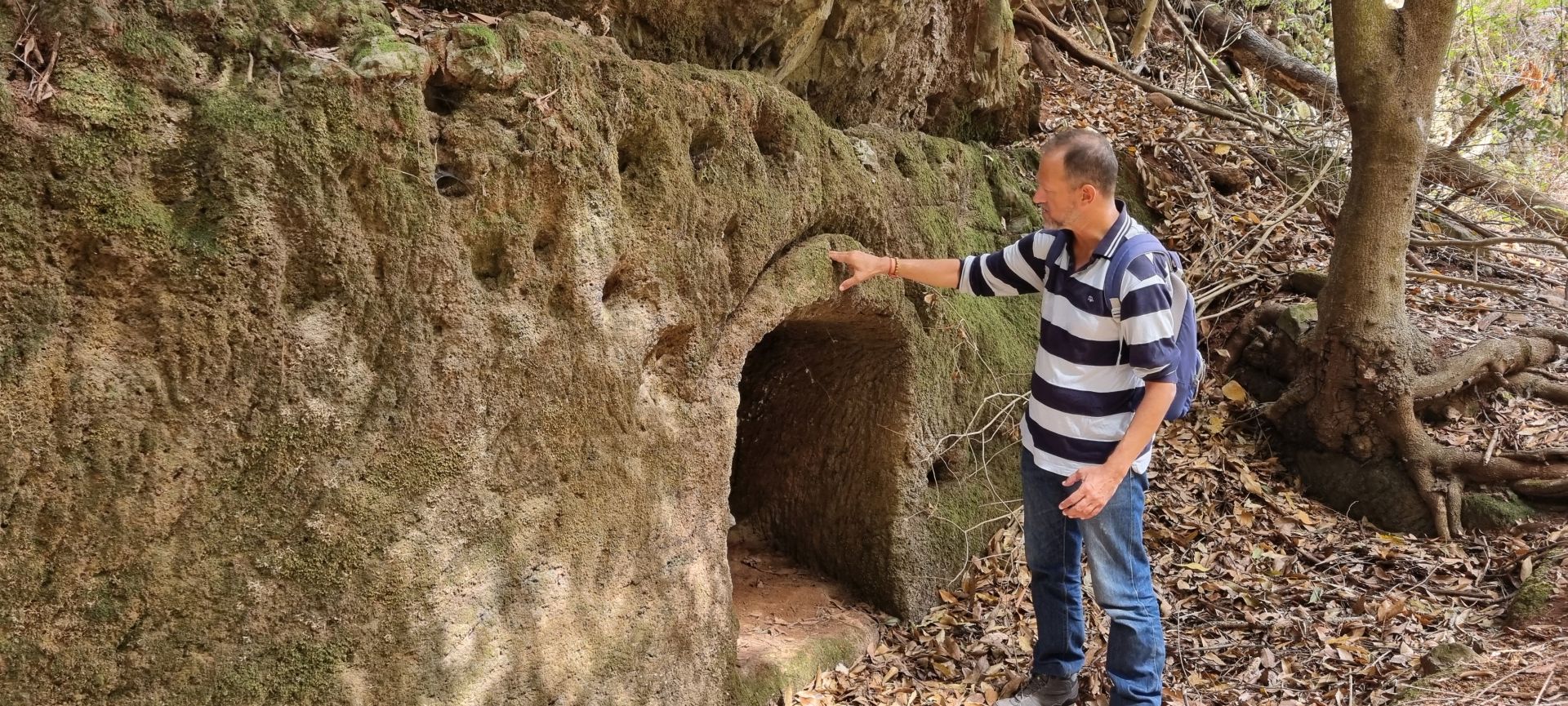
So, they aren’t Portuguese structures. They are very connected to ancient seafaring peoples that had the ability to reach the archipelago in ancient times, and who do have the same kinds of structures.
We’ve also been finding evidence of writing systems in some of those structures that have very close connections to ancient writing systems, that predate the Portuguese settlement by centuries and sometimes thousands of years.
Wow. That sounds convincing. Regarding the orientation to certain constellations, do you find this reoccurring in different structures, so you can say, even to a critical mind, that it’s no coincidence?
Yes, for instance, something that I’ve found in different structures, in different parts of Madeira, is the depiction of the Pleiades constellation. The seven or eight main stars of the very striking, very easy to identify, constellation. And if you are going to study ancient Greek legends and mythology, you’ll find the Pleiades are the seven daughters of Atlas.
Ancient classical sources from the Roman and the Greek times connect very clearly the Pleiades with the westward part of the known world, beyond the “Pillars of Hercules” which was the ancient name of the Strait of Gibraltar. The islands that are known as Macaronesia – “The islands of the blessed” – Madeira, Azores, Canary Islands, are connected to this constellation. The depiction of the Pleiades constellation is set in stone in different structures in different parts of Madeira Island.
Another very important constellation is Canis major where Sirius, the brightest star in the firmament, is located. We also have certain structures that depict this constellation and are also oriented to the coincidence of the rising of Sirius and the rising of the Sun in the beginning of August. For the ancient Egyptians, this was a very important moment of the year.
So, this can hardly be attributed to mere coincidence.
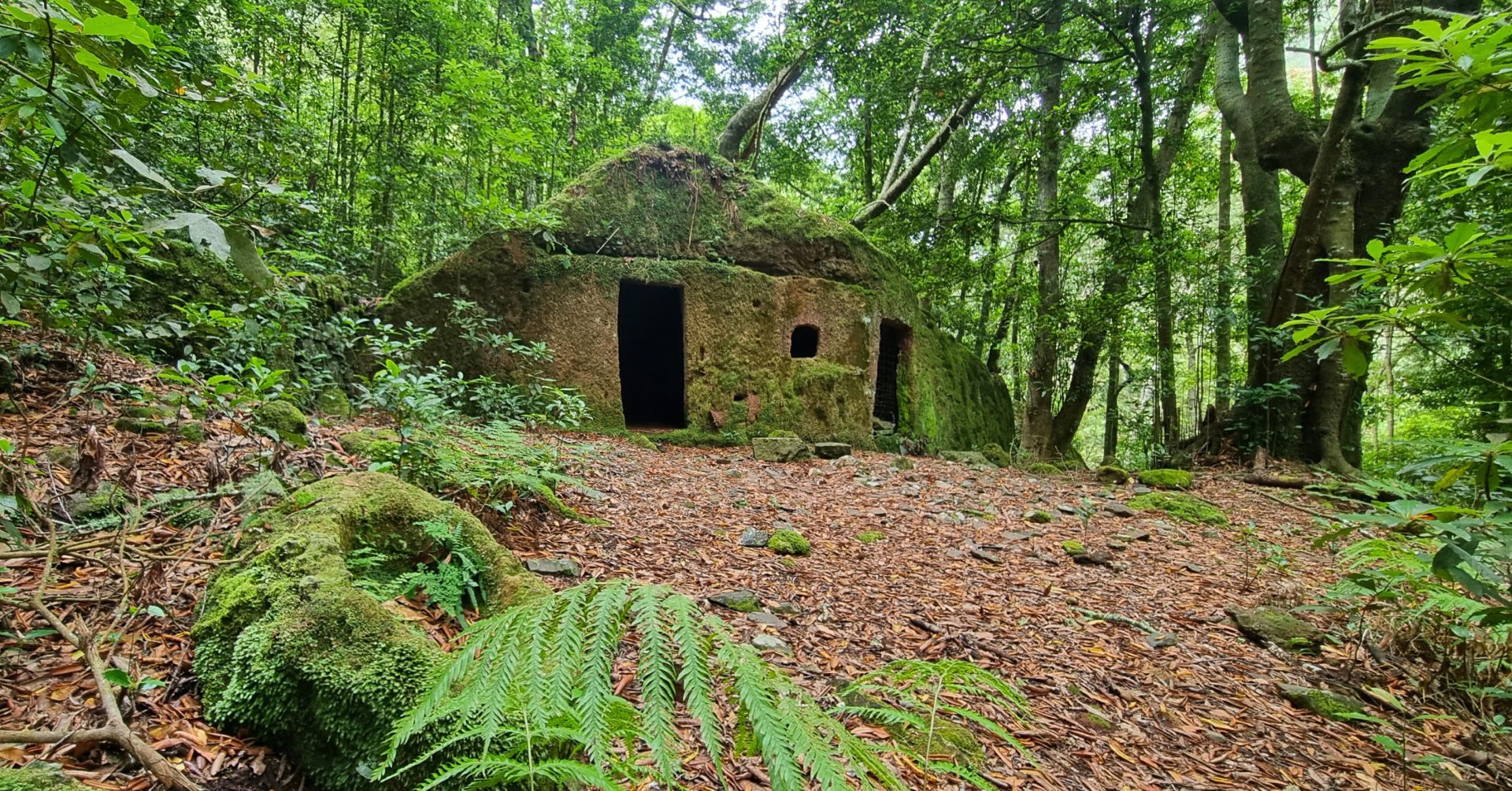
Beyond the orientation of the structures, there are also striking architectonic features. For instance, there is a structure, that has a false door. And then it has a door that goes to a chamber, and it also has a kind of ritual pool right next to it. In terms of function, like saying that this is something for farmers to keep their tools or a shelter or something like that, makes absolutely no sense.
Why build a false door? A door that is ornated and that has certain perforating decorations that also mimic the Pleiades and other star clusters.
The building of false doors into funerary structures was actually very common in ancient North Africa, and ancient Mediterranean islands like Sardinia and Sicily and other islands, where archaeology shows a lot of examples of that. The ritual function of a false door was for the soul of the departed to enter and exit that structure into the other world.
To say that it is a coincidence, to say that they started to build a door and then gave up because they didn’t want to continue… I guess, when you are very, very set in using that kind of nihilistic argument, you can always perceive that to be true. But for me it makes absolutely no sense, and I have no doubt.
I also know that some open-minded archaeologist, because there are some open-minded archaeologists, when they realize that these structures are present, I am sure they will do proper archaeological research and eventually update their idea and acknowledge that these are very ancient and pre-Portuguese remnants. Until that, what I and others can do is to put the theories out there, so that others in the future can finish the job.
That makes me think that your work could help potentially protect those structures. Because if they’re not known, they’re not recognized, then they’re basically not protected.
Yes, and I am a little bit worried about some of them, because nowadays, construction and other developments in the archipelago are very expansive, they are expanding very quickly. Some of those structure, fortunately, are in remote locations, without easy access. What I and other researchers are facing, is a kind of dilemma. In a way, we feel like if these structures are more known and valued it will be a very good contribution to preserving them in the future, even classify them, hopefully.
And at the same time, we are very careful about making the precise location known, because Madeira is having a problem of over-tourism and we want to avoid having people go there just for shallow curiosity, maybe to take a little piece of rock, maybe to engrave their name in the place, something like that. So, until those places are more valued and recognized by the institutions and measures are set to ensure that they are more watched over, I think that it’s important to not make the precise location known. My book will have pictures of the structures that I speak about, but I will not publish the exact locations. At this stage, it is necessary to have this kind of precaution.
I think, the people who read my book, will understand that. Pictures are included, and I mention the municipalities where the structures are located.
Some of them are very vulnerable, especially this funerary temple that I mentioned earlier. It’s the ‘smoking gun’ for me of a pre-Portuguese presence in the island. Because there is no way that that is a farmer’s shelter or something like that. And the similarities with other known temples in other parts of the ancient world is very, very, very striking. And it is vulnerable. So, I think it is very important for us to document it, in terms of photographs from different angles, and drawings, but it is important to keep it secret for now.
But of course, if a serious investigator, an archaeologist, or historian, wants to deepen the research, those very specific people can reach out to me, and I will be very happy to take them to the places and to show them.
That sounds sensible. Can you tell us how many years of research went into your project? I can imagine it overlapped with other projects, but can you tell more or less how long you’ve worked on that? Is it your entire life’s work?
It is kind of a legacy for me, that’s very important. Something that I really, really want to leave behind as a gift of love. It’s a very deep study that goes into mythology, archaeology, linguistics etc. It overlapped of course with other projects over the years, but I can say that at least a solid 20 years of documental research, especially going down into books about different cultures around the world, went into the creation of “Secret History of Madeira and Porto Santo”. I’m also very passionate about mythology, religion and spiritual practices of different peoples in different time periods, and I have a lot of handbooks with a lot of notes and dissertations that I wrote per hand throughout the years, which I finally brought together and synthesized in this work.
At least a solid 20 years of research went into the creation of this book.
I’ve also published a previous book, that can be a kind of companion book to this one, which is titled “The other side of time” – “O outro lado do tempo” in Portuguese. It is a kind of spiritual history of Portugal. So, it does not have an emphasis in Madeira, like this one has, but it is about the spiritual history of Portugal. I had also spent years writing that book, which dives into aspects about the Knights Templar, about secret societies in the Middle Ages who were very influential to the Portuguese discovery and the settlement of Madeira.
Also, the last chapters of “Secret History of Madeira and Porto Santo” speak to that period of the Middle Ages, the study of those secret societies, the study of the Knights Templar, and the importance they had in European esoteric knowledge. The official discovery of Madeira and Porto Santo as well as the current settlement of these islands by the Portuguese people has its roots in the Knights Templar as well.
To tease curiosity: My new book has a chapter about the real identity of Christopher Columbus, the well-known navigator that revealed the American continent to the world. I defend the theory that he was not Italian, and I sustain in the footsteps of other Portuguese historians, whom I acknowledge in this chapter, the idea that he was not Italian and that his life was very much connected to Madeira and Porto Santo.
Besides being an astrologer, I also work with Ley Lines and the last chapter of the book dives into that subject. It is dedicated to the sacred meridians of the earth and the important position that Madeira has in the earth’s energy grid. It also speaks about the connection that Madeira has with other key historical archaeological locations of the planet alongside those energy meridians.
So, the first and the last chapters of the book are more esoteric in nature, the other chapters are more historical and mythological.
Thank you for the preview. Is there a particular discovery, something that really surprised you during your research?
There is! Madeira is a perfect example of a very ancient way of using the landscape that has been documented by a very little-known Peruvian archaeologist. His name was Daniel Ruzo. In the 1950s in Peru he identified a way how the ancient peoples very subtly intervened into the landscape.
I have a part of the first chapter dedicated to that.
They noticed natural geological features in the landscape, and then slightly modified them in order for the shadows to emphasize certain images. So, that Peruvian investigator named that kind of culture a masma type of culture because masma is a plateau near Lima in Peru, where he first noticed that kind of intervention.
And those features, they change throughout the day and throughout different parts of the year, especially the equinoxes and solstices. Madeira has a huge abundance of those kinds of structures. In the book, I present pictures of some of them.
Finding those kinds of structures on Madeira was something that surprised me.
Because I had learned about the work of Daniel Ruzo in my studies during my younger years, especially through French authors like Robert Charroux and Jacques Bergier.
Ruzo thought that these civilisations were pre-Deluvian, which means thousands of years old. And to find a huge abundance of features like that in Madeira and Porto Santo, and very striking ones that we can really, really see the human intervention in the natural geological features, was something that surprised me and I think that I am the first author to make that correlation in my book.
Other places of the world have been mentioned in relation to those kinds of structures. In southern Europe, and in Romania for example, there are places with those kinds of very striking presences. So, to put Madeira in that network is something that surprised me and it is one of the most original perspectives that my book is going to present.
How did you balance historical accuracy with storytelling, and making your book available for the general audience, who is not a historian or archaeologist?
It’s been a challenge for me. I must admit that. Because my natural way of writing is a very scholarly one. I’ve tried my best in this book to make it more open and more general, more appealing to readers who might not have a deep knowledge regarding history and mythology. And I think that in this book, I really made a great leap in my writing style, so to speak.
I think that any reader with the desire to learn, to go deeper, will find the book accessible. And I really stepped out of my usual writing style for that. I really wish to reach more people, and I want this book to be my legacy, a very important legacy regarding the love that I feel for these islands.
And what do you hope that readers will take away from your book? You’ve mentioned before, that if a professional reads it, they might want to go deeper into research. And anyone else, what do you hope they take away?
I think that, especially for people who also love Madeira, this book can be very enriching – be it Madeirans learning about their own island, or non-Madeirans who live here and love this place. It’s also for people who, in general, have an interest in Madeira, and also in the hidden history of humanity.
By reading this book, maybe they’ll want to come to Madeira and really experience the energy of these islands. The gifts that these islands can give to someone are not only about marvelling at the natural geological beauties they offer, but also about enriching the understanding of human history, and building a deeper connection to these islands.
This book is also a great choice for any reader who is motivated to have new perspectives about human history, who somehow has the intuition that the history presented in ordinary history books is not depicting the full picture, and that there are other things to learn.
Though the book is focused on the Madeiran Archipelago, it contains a lot of information regarding mythology, esoterical knowledge and ancient civilisations, that will also be of great interest to those readers.
Some readers might just want to learn about an interesting place on the planet and maybe feel a personal calling, possibly in an unconscious way. This book can open a new path and a new point of view for them, too.
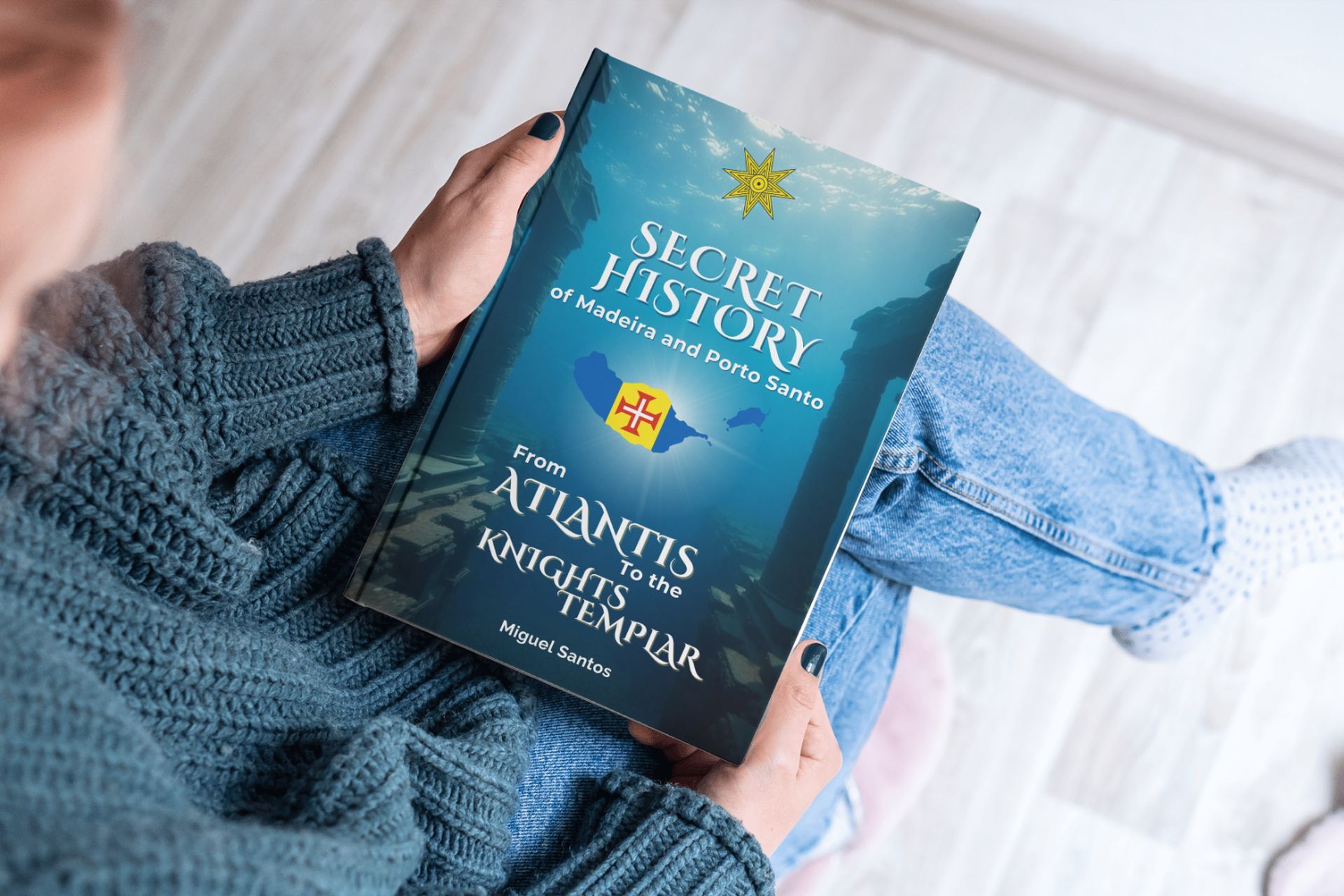
Great. For everyone who’s curious now, where will people be able to find and buy your book?
I will launch a campaign in social networks in which people can pre-order the book, which will be available mostly in that regard. After that initial pre-ordering campaign, the book will be printed and I will organize public releasing here in Funchal, Madeira.
The way to acquire the book worldwide is through a website that will provide a pre-ordering opportunity. Once the book is printed it will be sent out by mail.
This is the first edition. Who knows, maybe other editions will come in the future.
The book is going to be released in English and Portuguese now. Maybe in the future, it can be translated into other languages.
If someone wants to go a bit further, will there be some kind of launch event or possibility to meet you in person?
Yes, in Funchal, I intend to have a public launching. It would be interesting to find a kind of striking natural environment in which to make an artistic event, but let’s see. So far, it will be launched in Funchal and of course I am always very open and happy to meet people and to try to convey and transmit this deeply rooted passion that I have about these islands and about their hidden history as well as the hidden history of humanity.
This is my life’s mission.
So, my personal mission upon this world is to share with others the hidden, secret history of humanity and the idea that we are much older than we think we are. We are inheritors of very ancient and evolved civilisations and the lost knowledge of those civilisations is a key aspect for us to rebuild our relationship with each other and with nature and the earth in this very, very key critical moment of human evolution, that we are passing through in the 21st century.
A very deep feeling that I have, which I also mention in the preface of the book, is that the only way for humanity to really reach a balance in its relationship with the earth and other species is to re-evaluate their own history. And for me, that is the core of my personal, spiritual mission as an astrologer, a heterodox, a historian, and as an independent researcher in this life.
That’s very beautiful. As a closing thought: If you had to describe Madeira and Porto Santo in just three words from the perspective of their hidden history, which would you choose?
Wow. I think maybe: Hidden Sanctuaries of Humanity.
Is there anything else you would like to add to this, that we haven’t touched on yet?
I think we’ve touched on the key aspects. I think that Madeira has a special mission to play in this critical point in history, because it has the connection and the ability to open a kind of portal to that ancient knowledge. It can inspire people all over the world to really re-evaluate their place in nature and their place with each other.
Madeira has, because of its position which you will understand in the last chapter about the ley lines, a very special role and potential to play in the near future evolution of humanity. Spiritual seekers, people who are wondering about their place in the world, people who feel that something is missing, will find that this book can also offer them some important hints and clues to better navigate and better situate themselves in this very challenging point of history in which we all are collectively. This more spiritual, transpersonal aspect of the book can offer something of value to those readers.
Thank you for this conversation and these insights.
Everyone who wants to know more, get in touch with Miguel and pre-order the book:
Website to pre-order the book: https://secrethistoryofmadeira.my.canva.site
Miguel's instagram: @miguelsantos376
Miguel's email: miguelsantos216@gmail.com
